

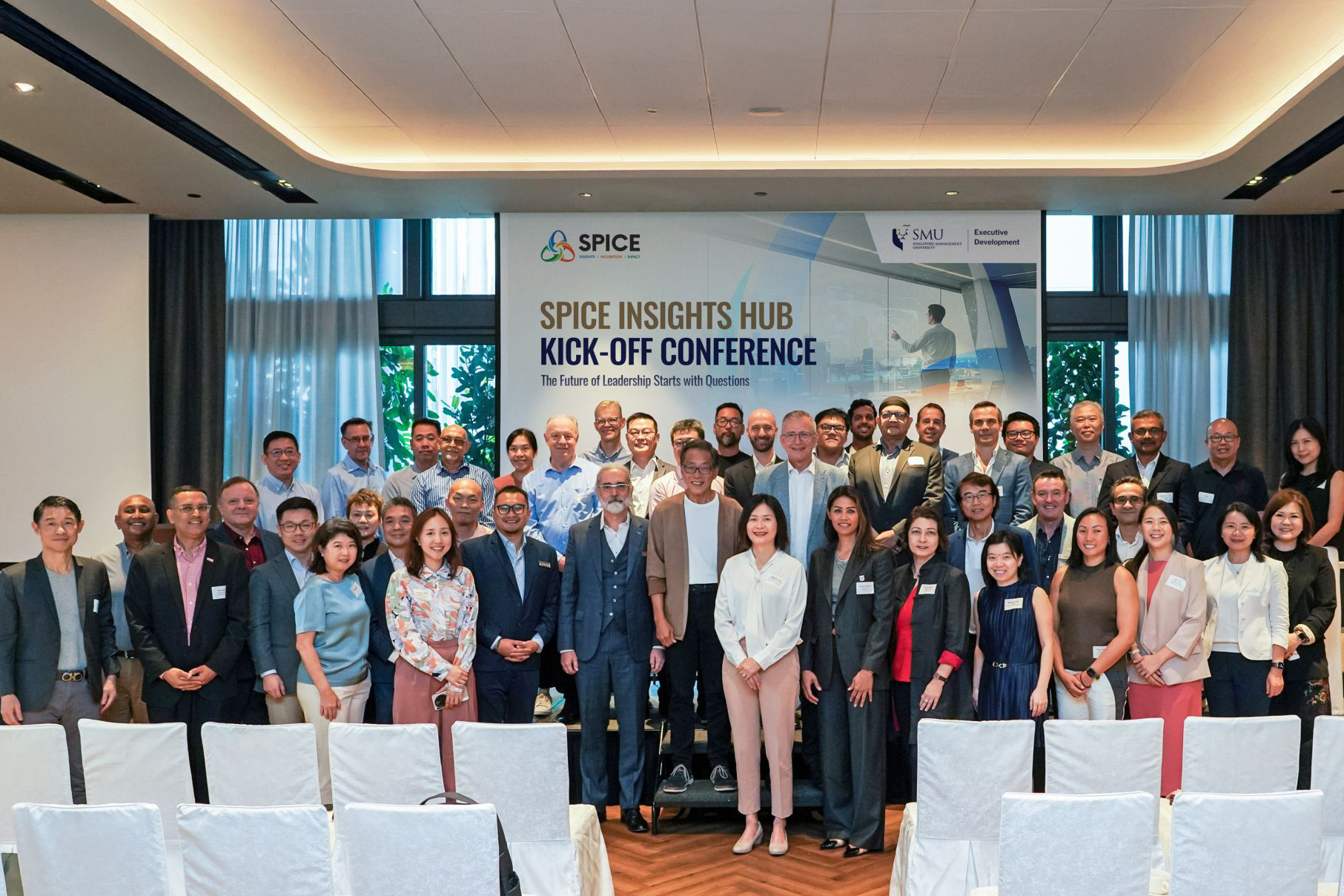
On 26 February 2026, senior executives, thought leaders and practitioners gathered at the inaugural SPICE Insights Hub Kick-Off Conference, hosted by SMU Executive Development (ExD).
The full-day forum also marked the launch of the SPICE Insights Hub, a platform designed to spark dialogue on emerging leadership challenges and opportunities in a rapidly evolving world.
Bringing together leaders from across business, academia and public policy, the conference invited participants to rethink how organisations learn, adapt and create value amid technological disruption, geopolitical uncertainty and shifting societal expectations.
Rather than traditional presentations, the event was structured as a series of moderated debates using an “Empty Chair” format, allowing members of the audience to step into the discussion and contribute their perspectives. The format created a highly participatory environment where ideas could be challenged openly and insights shared across disciplines.
Rethinking Leadership in a Changing Global Landscape
The conference opened with reflections from Ho Kwon Ping, Executive Chairman of Banyan Group, who challenged prevailing assumptions about leadership within both the Singaporean and global context.
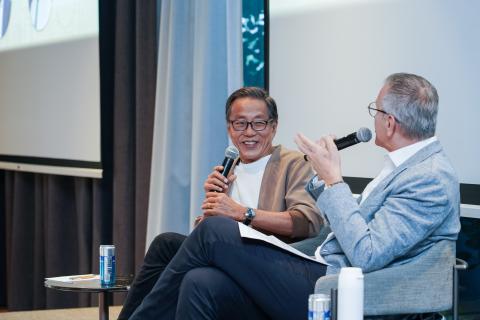
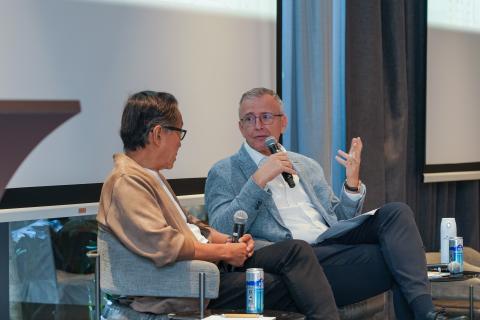
Reflecting on the current geopolitical climate, Kwon Ping pointed to the growing uncertainty surrounding global leadership dynamics and suggested that Asia’s leaders may increasingly be called upon to step forward.
He emphasised the importance of thoughtful, responsible leadership at a time when global institutions and traditional centres of influence are being tested.
His remarks set the tone for the day’s conversations: a willingness to question long-held assumptions and re-examine what effective leadership requires in today’s world.
Read this session's highlights.
Panel 1: Moving Beyond Leadership Formulas
The first panel explored whether leadership development has become overly dependent on formulas and frameworks.
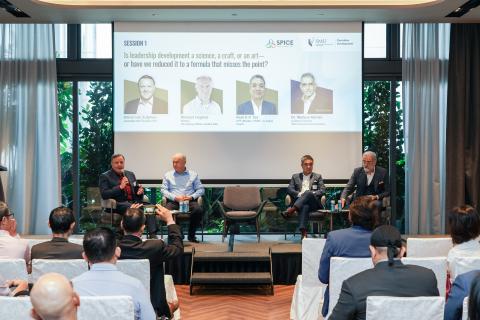
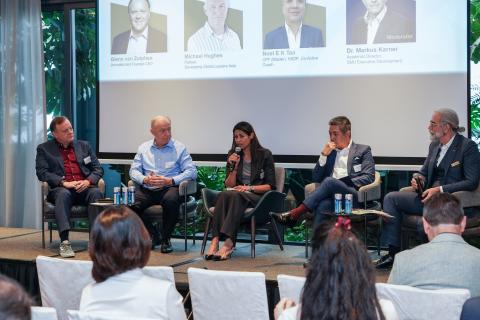
Moderated by Dr Markus Karner, the discussion featured Glenn van Zutphen, Mike Hughes and Noel Tan. The panel highlighted that while leadership models provide useful guidance, effective leadership ultimately requires emotional awareness, personal reflection and the ability to adapt to complex organisational contexts.
They emphasised that leadership development must move beyond rigid frameworks and embrace a more holistic understanding of human behaviour and decision-making.
Review the key insights from this session.
Panel 2: Cognitive Atrophy in the Age of AI
Artificial intelligence took centre stage in the second session, which examined how AI may reshape human thinking and decision-making.
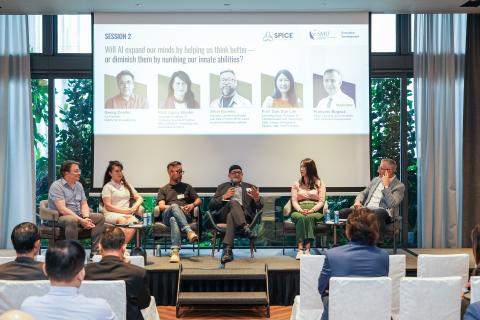
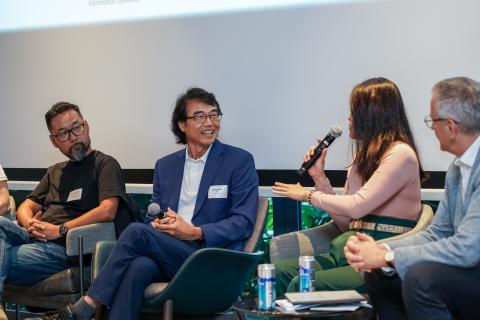
Moderated by François Bogacz, the panel brought together Prof Lim Sun Sun, Shun Kaneko, Prof Laura Wynter and Georg Zoeller.
The discussion explored both the promise and the limitations of AI. While AI technologies can significantly enhance analytical capabilities, the panel also raised concerns about the potential erosion of critical thinking if leaders become overly dependent on algorithmic systems.
Notably, the session featured genuine disagreement among panelists—reflecting the unresolved debates surrounding the long-term impact of AI on human cognition and leadership judgment.
Review this session's recap.
Panel 3: Meaning and Value in Business
The panel explored the relationship between storytelling, meaning and value creation in modern organisations.
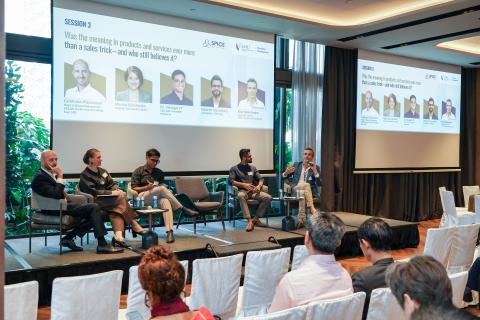
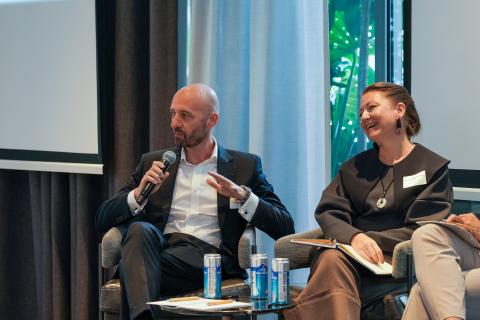
Moderated by Eric Saint-André, the discussion featured Utkarsh Choudhary, Dr Vaisagh V. T., Marina Surzhenko and Cristiano Pizzocheri.
The panel examined the tension between commercial narratives and authentic value creation. While compelling storytelling can influence market perception, the panel concluded that long-term success ultimately depends on organisations delivering genuine value and purpose through their products, services and organisational culture.
Check out the key takeaways from this session.
Panel 4: Business Success and Social Impact
The conversation then turned to the relationship between business performance and social impact.
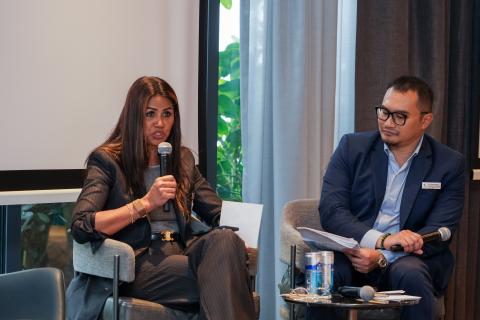
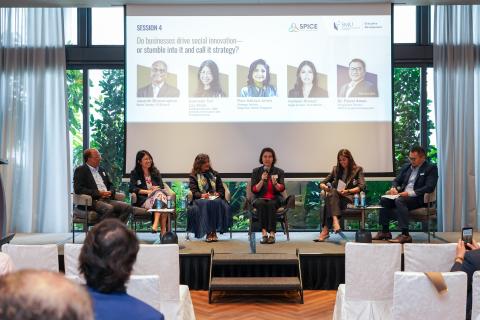
Moderated by Dr Faisal Aman, the panel included Jayanth Bhuvaraghan, Gabrielle Tan Lay Khim, Sakaya Johns Rani and Hazleen Ahmad.
Panelists reflected on whether meaningful social impact emerges from deliberate corporate strategy or from entrepreneurial experimentation. The discussion suggested that strong financial performance often creates the conditions that enable organisations to pursue broader societal goals—highlighting the complex relationship between doing well and doing good.
Check out the session's key points.
Panel 5: The Rise of Fractional Leadership
The final session examined the growing trend of fractional leadership roles, where experienced executives work across multiple organisations rather than committing to a single long-term position.
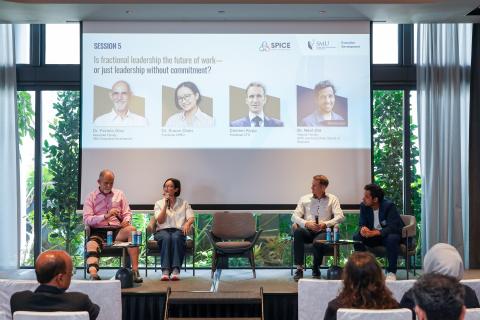
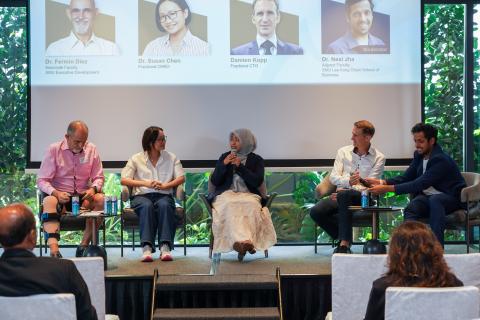
Moderated by Dr Neal Jha, the panel featured Dr Fermin Diez, Dr Susan P. Chen and Damien Kopp.
While fractional leadership models can provide organisations with access to specialised expertise and flexibility, panelists also raised important questions about continuity, accountability and organisational stewardship. The discussion suggested that evolving workforce expectations may fundamentally reshape how leadership roles are structured in the years ahead.
Explore the highlights from this session.
Advancing Leadership Conversations Through SPICE
The conference marked the official launch of the SPICE Insights Hub, part of SMU Executive Development’s broader SPICE initiative — Spark, Pilot, Incubate, Collaborate and Elevate.
Through the Insights Hub, ExD aims to provide a platform where leaders can explore emerging ideas, challenge conventional thinking and engage in meaningful dialogue on the future of leadership and organisational transformation.
As the inaugural conference demonstrated, leadership today is no longer confined to technical expertise or established frameworks. Instead, it requires leaders who are prepared to navigate uncertainty, integrate diverse perspectives and make thoughtful decisions in an increasingly complex world.
The SPICE Insights Hub seeks to support precisely these kinds of conversations — bringing together leaders who are ready not only to respond to change, but to shape what comes next.