

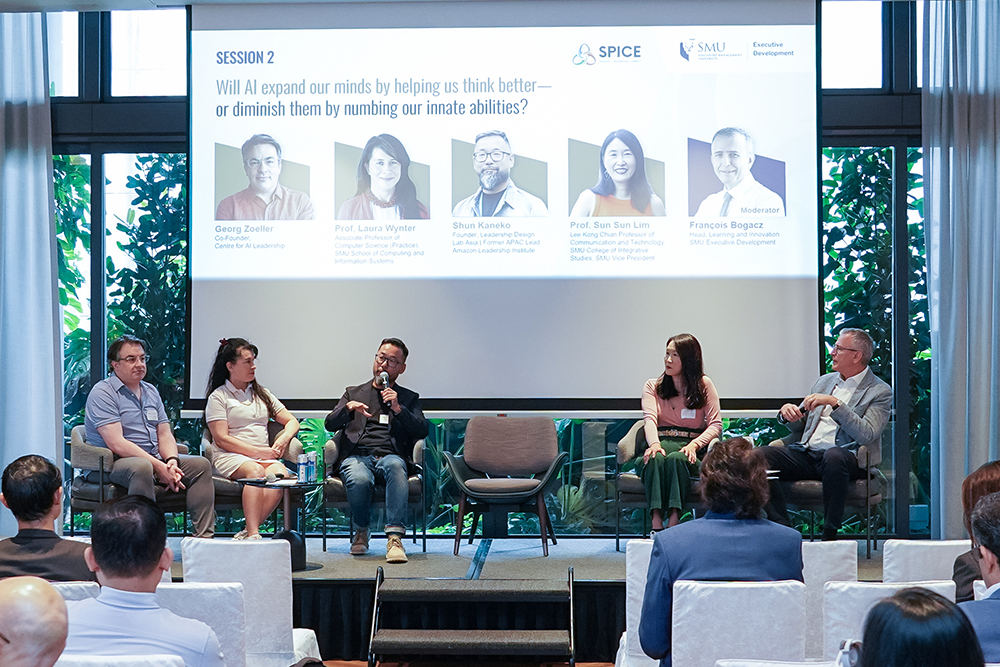
The following article is a brief recap of the discussion that transpired during the SPICE Insights Hub Conference on 26 February.
Artificial intelligence is rapidly transforming how leaders access information and analyse complex problems.
But a deeper concern is beginning to emerge.
Will AI expand human intelligence — or quietly weaken it?
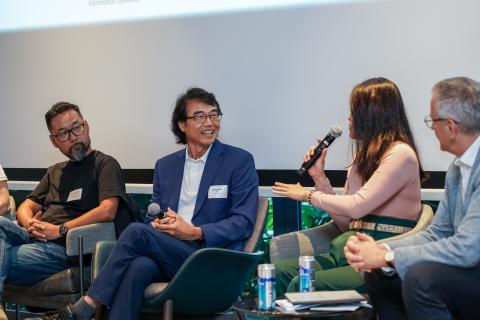
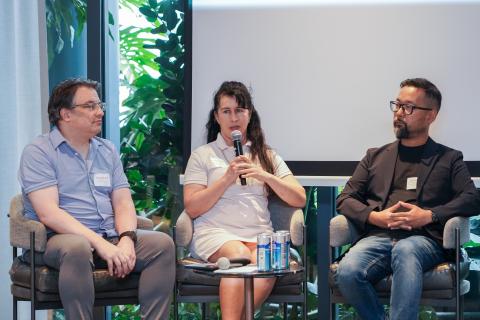
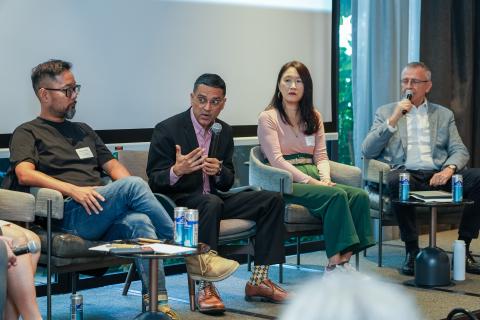
This tension was explored during one of the debates at the SPICE Kick-off event with François Bogacz, Prof. Sun Sun Lim, Shun Kaneko, Prof. Laura Wynter and Georg Zoeller
The changing value of expertise
For centuries, education has been built around the accumulation of knowledge and expertise. Today, AI systems can retrieve, summarise, and analyse information almost instantly.
This raises an important question for universities and leadership programmes: "If knowledge becomes universally accessible, what capabilities will distinguish effective leaders?"
Increasingly, the answer may lie in abilities that machines struggle to replicate, including:
- emotionally informed judgment
- ethical reasoning
- cultural intelligence
- interpretation of subtle human signals
- decision-making in ambiguous environments
These capabilities rely not on information access, but on deep human insight.
The danger of cognitive atrophy
History suggests that technological convenience often comes with unintended consequences.
GPS navigation has reduced our reliance on spatial memory. Calculators have weakened mental arithmetic. Autocomplete has subtly changed writing habits.
Artificial intelligence may produce a similar effect.
When technology performs cognitive tasks on our behalf, the mental “muscles” responsible for those tasks may gradually weaken.
This phenomenon — sometimes described as cognitive atrophy — raises an important challenge for leaders.
If AI handles analysis and synthesis, leaders must ensure they do not lose the ability to think independently.

AI as a thinking partner
Used wisely, AI could instead strengthen human thinking.
Some leaders already use AI systems to simulate alternative perspectives — generating hypothetical board discussions or challenging assumptions in strategic planning.
In this sense, AI could function as an intellectual sparring partner, encouraging deeper reflection rather than replacing it.
The real question may therefore not be whether AI makes leaders smarter — but whether leaders choose to use it in ways that strengthen their thinking.