

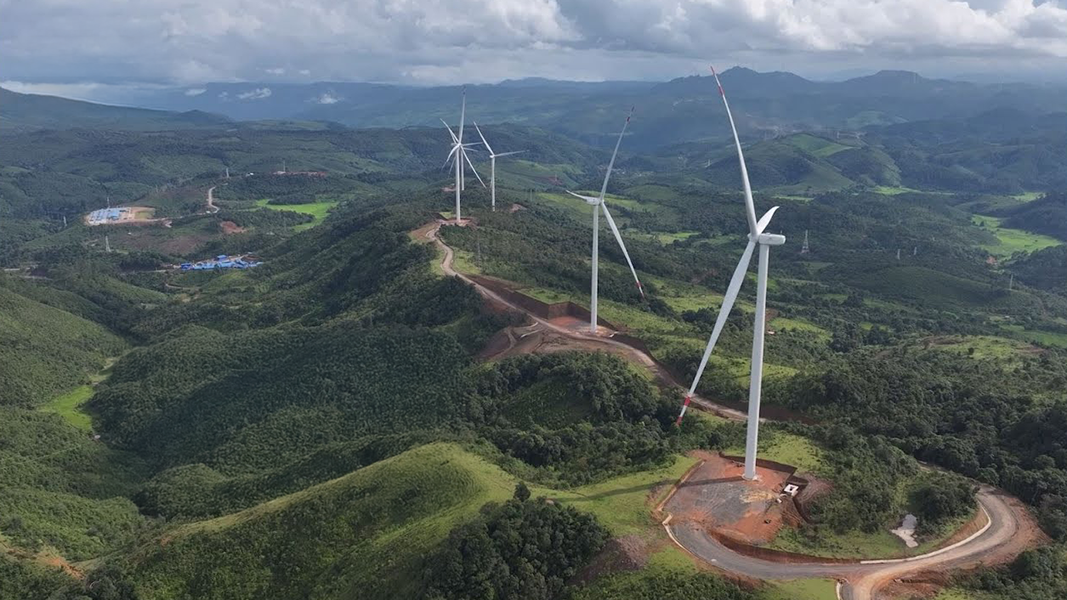
The Asian Development Bank-backed Monsoon Wind project is more than Laos’ first wind farm. It is a test case for how large-scale sustainable infrastructure can be financed, de-risked, and executed in frontier markets previously considered “uninvestable”.
At a time when Asia faces a massive infrastructure financing gap and mounting pressure to decarbonise, the Monsoon Wind Project demonstrates something critical: sustainability projects succeed not because risks disappear, but because risks are intelligently distributed across governments, development institutions, private capital, and local stakeholders.
The project challenges several assumptions:
- That poorer countries cannot support sophisticated renewable infrastructure
- That cross-border renewable power trade in ASEAN is impractical
- That private lenders will avoid frontier-market clean energy projects
- That sustainability and commercial viability cannot coexist
It shows that when policy alignment, blended finance, and regional cooperation converge, even highly complex projects can become bankable.
The case is featured is the following programmes offered by SMU Executive Development.
From Impossible Idea to Regional Blueprint
In 2011, when Founder of Thai renewable energy company Impact Electrons Siam, Peck Khamkanist first explored the idea of building a wind farm in Laos, the proposal appeared commercially unrealistic.
Laos lacked the infrastructure, financing ecosystem, and institutional maturity typically associated with large-scale renewable developments. The terrain was remote, logistics were difficult, and even potential buyers were hesitant to commit to wind energy.
However, those same constraints created an opportunity.
Southern Laos possessed unusually strong and consistent wind conditions due to its mountainous geography and monsoon patterns. More importantly, the project sat near the Vietnamese border, creating the possibility of exporting renewable electricity into a fast-growing energy market.
Khamkanist set up the Monsoon Wind special purpose vehicle to bring together an international consortium of sponsors and lenders to develop the first cross-border renewable energy project in South East Asia, where electricity generated in Laos would be exported to Vietnam.
The Asian Development Bank (ADB) played a key role in validating the project through its due diligence and oversight, mobilising private sector participation through an A/B and parallel loan structure. Concessional funds were also used to mitigate curtailment risk.
This transformed Monsoon Wind from a domestic infrastructure project into a regional energy integration play. Here are four lessons we can learn from the 600MW wind farm project that started delivering clean energy across borders since August 2025.
Lesson 1: Sustainable Infrastructure Requires Regional Thinking
One of the project’s biggest lessons is that sustainable infrastructure increasingly operates across borders rather than within them.
ASEAN’s vision for an interconnected regional power grid created the strategic backdrop for the project. Laos had renewable energy potential but limited domestic demand. Vietnam had rising energy demand but needed cleaner electricity sources.
The solution was cross-border energy trade.
The eventual 25-year power purchase agreement (PPA) with Vietnam Electricity became the project’s commercial backbone. Without a committed buyer, the wind farm would likely never have secured financing.
What this means: This reflects a broader shift happening across Asia as renewable energy projects become regional infrastructure assets. Energy security is increasingly interconnected, and decarbonisation strategies now depend on cross-border collaboration.
For policymakers and developers, the strategic question is no longer simply how to generate enough power domestically, but how to optimise renewable resources across the region.
Lesson 2: Blended Finance was the Enabler
The Monsoon Wind project’s financing structure may ultimately become its most influential legacy.
The project secured approximately US$692 million through a blended finance structure led by the Asian Development Bank. Commercial banks alone would likely not have financed a non-recourse wind project in a frontier market exposed to political, regulatory, currency, and curtailment risks.
Instead, the capital stack combined:
- Development finance
- Concessional capital
- Commercial lending
- Political and structural risk mitigation
- Long-tenor infrastructure debt
What this means: This matters because many sustainability projects today are economically valuable but financially difficult. There is a growing disconnect between what climate transition requires and what private capital can comfortably finance under conventional risk models. Blended finance helps bridge that gap.
Monsoon Wind also demonstrates an important nuance: concessional finance is not meant to subsidise sponsor profits. Its role is to absorb risks that markets cannot yet price efficiently and unlock projects that otherwise would not proceed.
Lesson 3: Bankability Is Built Through Risk Engineering
The project succeeded because developers systematically addressed investor concerns.
The power purchase agreement was governed under English law rather than Vietnamese law. Payments were denominated in US dollars and routed offshore to minimise currency risk. Disputes were subject to arbitration in Singapore.
ADB also introduced safeguards against curtailment risk — one of the biggest concerns in renewable energy projects where grid operators may unexpectedly reduce electricity offtake.
What this means: More than administrative details, these were examples of sophisticated risk engineering. Too often, sustainability conversations focus heavily on environmental ambition while underestimating financial architecture.
In reality, infrastructure investors fund predictability, not vision alone. The projects that attract capital are usually the ones that reduce uncertainty most effectively.
Lesson 4: Sustainability Projects Now Require Social Legitimacy
The Monsoon Wind Project also reflects how environmental sustainability alone is no longer sufficient. Infrastructure projects increasingly require social legitimacy to maintain long-term viability.
The project avoided community resettlements despite affecting 29 villages and approximately 15,000 residents. Sponsors also established a US$1.1 million annual Community Development Fund focused on healthcare, education, livelihoods, infrastructure, tourism, and community resilience.
What this means: This reflects a broader shift in infrastructure development. Projects that fail socially are becoming financially riskier. Environmental and social safeguards are no longer viewed purely as compliance obligations. Increasingly, they influence financing access, political acceptance, and operational continuity.
The Bigger Lesson for Sustainable Finance
Ultimately, the Monsoon Wind Project is a case study in systems thinking. The project succeeded because multiple systems aligned simultaneously:
- regional policy integration,
- blended finance,
- infrastructure engineering,
- legal structuring,
- environmental safeguards,
- community engagement,
- and private sector execution.
This is increasingly the reality of sustainable finance.
The next generation of climate and infrastructure projects will not be solved by technology alone. They will depend on the ability to coordinate capital, policy, institutions, and communities at scale.
That is what makes Monsoon Wind significant. It is not merely a wind farm in Laos. It is an early blueprint for how Asia may finance the energy transition over the next two decades.
Refer to the full case study here.