


Corporate Social Responsibility once defined an organisation’s social footprint. But the conversation and initiatives have evolved over the years, shifting from symbolic initiatives to integrating social impact into business models that drive measurable and meaningful outcomes.
In 2026, social impact could take new forms across communities, the environment, and corporate culture. Community initiatives may focus less on charity and more on empowerment. Environmental programmes could shift from mitigation to restoration, tackling biodiversity loss and climate resilience. Within businesses, DEI will evolve into a more holistic push for fair, inclusive workplaces and leadership pipelines, especially in Asia.
Measuring this social impact remains one of the biggest challenges today. Unlike financial returns, social impact outcomes are complex and often intangible. Measuring biodiversity gains is different from measuring community well-being or inclusion. Existing frameworks, largely shaped by private investors, may not always serve social enterprises or grassroots organisations well.
What is social impact?
The term social impact is often used in boardrooms, annual reports, and sustainability strategies. But what does it really mean? For some organisations, social impact refers to community projects or environmental initiatives. For others, it is about embedding sustainability into business models that create both economic and societal value.
Herein lies one of the root causes of measurement; there is no universal definition of what it means. Every organisation, business, institution and non-profit have a different interpretation and definition.
In whatever way you define social impact, effective and strategic leaders acting as stewards can agree that measuring social impact needs to go beyond symbolism. It needs to be integrated across the decision-making process and shapes innovation.
The Challenge of Social Impact Measurement
According to the OECD Policy Guide on Social Impact Measurement, for entities in the social and solidarity economy (SSE), this challenge is even tougher. They often work on systemic issues, such as poverty reduction, inclusion, and biodiversity restoration where defining “success” cannot be reduced to a single metric.
For example, OECD’s policy guide highlighted the key difficulties and considerations which includes:
Balancing social and environmental objectives
Some initiatives and impact metrics may be easier to capture. For example, carbon reduction and water savings. But others, such as community well-being or inclusive leadership, are intangible and risk being overlooked.
Fragmented methodologies
From counting outputs to monetisation models, organisations face a confusing array of frameworks, with each of them requiring different resources and expertise.
Lack of a universal standard
Despite some progress in this field, there is no globally accepted methodology, yet. Many existing approaches are shaped by investors or commercial businesses, which are often ill-suited to grassroots or social economy organisations.
OECD’s policy guide highlights one clear barrier: If measurement approaches continue to be a challenge, social impact measurement will become more skewed and force organisations to focus on measuring what’s easiest rather than what matters most.
What does this mean for organisations in 2026?
The importance of social impact in 2026 lies not only in what organisations do, but in how they measure and demonstrate it. Without a clear line of sight and authenticity in measurement, the impact of social initiatives may risk being reduced to tokenism. Or even worse, greenwashing. With the right frameworks, however, organisations and non-profits alike can create models that deliver lasting outcomes for people, planet, and profit.
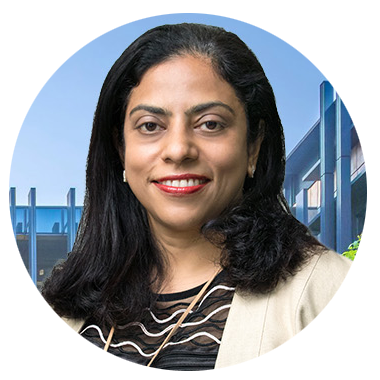
Dr Flocy Joseph
Senior Deputy Director, Head of Commercial
SMU Executive Development
For leaders, this means moving beyond traditional CSR into social impact business models that embed responsibility into strategy. Steward leaders, those who prioritise long-term value over short-term gains, will be at the forefront of this transformation.
To learn how leadership development can equip you to navigate these challenges, explore the Steward Leadership Advantage programme.
The programme conducted in partnership with the Stewardship Asia Centre, a non-profit organisation established by Temasek, equips senior leaders with frameworks and applied tools to redesign value creation through a stewardship lens so that doing what’s right for the future also becomes the path to lasting success.
Discover more of our other bespoke executive development programmes.