

Stakeholder expectations, regulatory scrutiny, and global boundaries are increasingly shaping what "value" might legitimately entail, imposing new limitations on how organisations operate. Businesses that still solely use quarterly returns for measuring success risk undermining the social, environmental, and human systems that support future performance.
Value creation frameworks may differ for every business and industry, but there are common themes that run through them. From innovation, processes to customer-centricity, future leaders are guided by stewardship in defining and creating their organisation's value.
Stewardship – The missing piece in a traditional value creation framework
Customer centricity, operational excellence, continuous innovation, stakeholder involvement, and strategic alliances are the pillars that are most commonly found in traditional value creation frameworks. These elements remain necessary because they drive the essence of efficiency, customer satisfaction and growth. In a nutshell, a business’s value creation model translates its customer insights into products and services with processes that deliver reliably and mobilise partnerships.
However, these frameworks often fall short when they assume systems are constantly stable and external factors remain manageable, with the thinking that future conditions will resemble the past. In reality, these assumptions fail when environmental degradation and social inequity continue to be important issues or regulatory and geopolitical tensions change the ground rules.
Traditional value creation was designed to create value primarily for immediate stakeholders i.e. customers and shareholders, without systematically accounting for the broader, intergenerational consequences of business decisions. This is where a stewardship lens would change the approach. A stewardship-led value creation widens the frame to include reducing environmental impact, community wellbeing and keeping future generations in consideration.
How stewardship reshapes value creation frameworks
A stewardship-driven framework rethinks the core questions of any value creation business model. Essentially, it puts forward four guiding values such as interdependence, long-term view, ownership mentality and creative resilience that change how value is defined, measured and delivered.
Interdependence: It’s important to recognise that business outcomes are dependent on its networks of suppliers, communities, partners and institutions. Today’s leaders who embrace this value often design an organisation's network that creates mutual value where success is not in profit, but in the wellbeing of its supporting network.
This could potentially be co-investing in capabilities, collaborating on shared infrastructure, or even building a business model where growth and success are distributed across stakeholders. These examples would bring about a value creation that’s dynamic and multiplies.
Long-term view: Whether it’s processes or supply chains, optimising business for the short-term often sacrifices the future. Adopting a long-term view on decisions dictates decisions that preserve and create value for today and tomorrow.
Moving forward, companies should identify ESG goals with the same priority as their commercial and financial goals. Design products with a lifecycle that extends beyond today’s limitations. Resist the pressure to boost the quarterly earnings report at the cost of future generations.
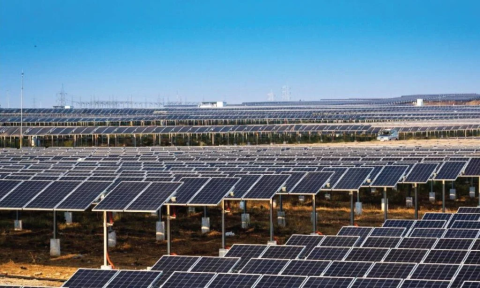
One example where an organisation has adopted a long-term view in its value creation is ReNew Power. Their business and operational processes demonstrate how prioritising renewable infrastructure and long-term contracted revenues can align commercial returns with decarbonisation goals.
Ownership Mentality: Stewardship should exist through an ownership mentality at all levels of the organisation. Instead of acting as passive operators, employees take the initiative to safeguard both tangible and intangible resources for potential stakeholders.
This is fostered by leadership through decentralising accountability, praising stewardship habits in evaluations, and even aligning compensation to long-term results. It is critical to align an organisation’s internal culture to stewardship values such that decisions are based on preservation, reputation, and legacy rather than just quarterly goals.
Creative Resilience: Last but not least, stewardship necessitates creative resilience, or the ability to create under pressure. Leaders respond to resource constraints and change by solving problems creatively, such that it restore capability rather than becoming paralysed.
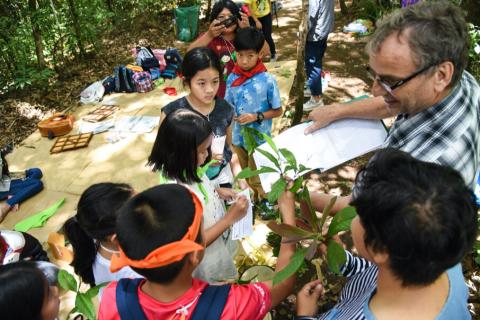
This value is demonstrated by the Doi Tung Development Project in Thailand, which demonstrates how design thinking and local stewardship provide livelihoods. At the same time, it enabled a recovery in its landscapes by transforming ecological restoration, local craft, and agribusiness into a sustainable economic model.
What this means for leaders trying to create value with Stewardship?
Operationalising stewardship is a leadership task. It begins by defining a clear, firm intent that connects mission, values and measurable outcomes. For leaders, the stewardship lens reframes the question from “How do we win this quarter?” to “How do we create value that endures?”
Traditional value creation frameworks remain relevant, but they are incomplete without the discipline of stewardship. By embedding these into an organisation, it creates an enduring business built for sustainable growth.
Explore SMU’s Executive Development Steward Leadership Advantage programme to transform your organisation for the future. The programme conducted in partnership with the Stewardship Asia Centre, a non-profit organisation established by Temasek, equips senior leaders with frameworks and applied tools to redesign value creation through a stewardship lens so that doing what’s right for the future also becomes the path to lasting success.
Discover more of our other bespoke executive development programmes.